Watch rice come to life in this bubbly and fun science experiment! Perfect for kids, classrooms, or curious minds at home.
What Makes This Experiment Special?
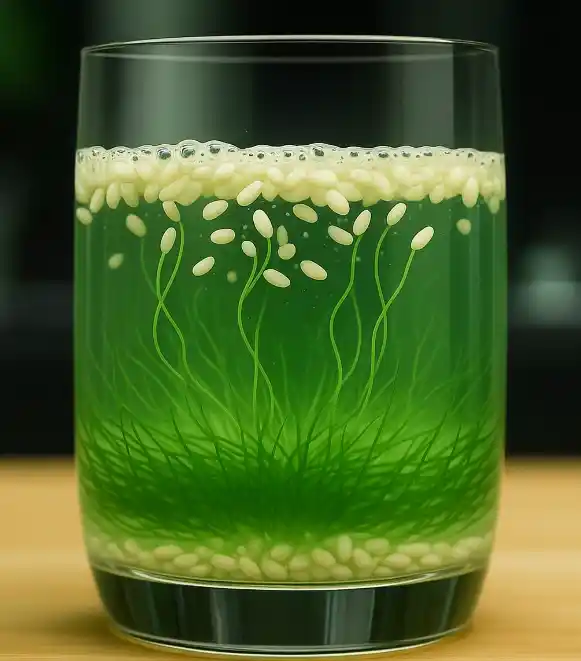
The Dancing Rice Experiment is an exciting, kid-friendly science project that brings simple kitchen ingredients to life. With nothing more than water, baking soda, vinegar, and rice, this activity demonstrates real chemical reactions in action. It’s a highly engaging way to introduce children to core science concepts like gas production, buoyancy, and density—all while having fun.
Educational Appeal
- Perfect for home-schooling, science fairs, or classroom demonstrations
- Encourages hands-on exploration and inquiry-based learning
- Teaches observation, hypothesis-building, and experimentation
- Suitable for a wide age range with minimal setup
Why You’ll Love It
- Quick setup and easy cleanup
- Uses everyday materials most people already have at home
- Visually impressive with immediate, repeatable results
- Adaptable for further scientific exploration
Preparation Phase & Tools to Use
Materials Required
Organize your supplies ahead of time for a smooth experiment. You’ll need:
The Salad Bowls Amazon Chose and Customers Love!
- 1 clear container (glass or plastic works best)
- 1 cup of water
- 1 teaspoon of baking soda
- 1 tablespoon of vinegar
- A small handful of uncooked white rice
- A spoon for stirring
- Food coloring (optional, to enhance visual effect)
Essential Tools and Equipment
Each item in this experiment plays a critical role. Here’s why they matter:
- Clear Container: Provides visibility from all sides so you can observe the reaction closely.
- Water: Acts as the medium for the reaction and helps dissolve the baking soda.
- Baking Soda: A base that reacts with vinegar to create carbon dioxide gas.
- Vinegar: An acid that initiates the reaction when combined with baking soda.
- Uncooked White Rice: Lightweight enough to be lifted by gas bubbles, making it ideal for this experiment.
- Spoon: Ensures even mixing for a consistent chemical reaction.
- Food Coloring (optional): Adds a visual pop, making the reaction more engaging for younger audiences.
Importance of Each Tool
| Tool | Purpose |
|---|---|
| Clear container | Provides transparency to observe rice movement |
| Baking soda | Reacts with vinegar to produce CO₂ gas |
| Vinegar | Combines with baking soda to cause bubbling |
| Water | Facilitates ingredient dissolution and movement |
| Rice | Acts as the lightweight material lifted by bubbles |
| Spoon | Helps ensure ingredients are thoroughly mixed |
| Food coloring | Enhances visibility and appeal |
Preparation Tips
- Use a container tall enough to give the rice room to rise and fall.
- Stir thoroughly to dissolve baking soda before adding rice.
- Measure ingredients precisely for a balanced reaction.
- Use uncooked white rice for best results—other types may be too dense or sticky.
- Conduct the experiment on a tray or easy-to-clean surface.
Ingredient List
To simplify your preparation, here’s a clean list of everything you’ll need:
Required Materials
- 1 cup of water (room temperature works best)
- 1 teaspoon of baking soda
- 1 tablespoon of vinegar (white vinegar preferred)
- A small handful of uncooked white rice
- 1 clear glass or plastic container
- 1 spoon for stirring
Optional Add-ins
- Food coloring for color variation
- Measuring spoons for precision
Step-by-Step Directions
Step 1: Prepare the Base
Pour 1 cup of water into the clear container. If you’re using food coloring, add a few drops and stir gently to evenly distribute the color.
Step 2: Dissolve the Baking Soda
Add 1 teaspoon of baking soda to the colored water. Stir with a spoon until it is fully dissolved. This ensures an even and complete chemical reaction later.
Step 3: Add the Rice
Drop in a small handful of uncooked white rice. You’ll notice the rice grains sink to the bottom at first. That’s exactly what you want—get ready for the magic.
Step 4: Trigger the Reaction
Pour in 1 tablespoon of vinegar. Instantly, you’ll see bubbles forming in the water. This is the result of the vinegar reacting with the baking soda to create carbon dioxide gas.
Step 5: Watch the Dance Begin
As the CO₂ bubbles form, they attach to the rice grains. This makes the rice buoyant enough to rise to the surface. When the bubbles pop, the rice sinks again. This process repeats in a mesmerizing dance cycle.
Step 6: Keep the Reaction Going
You can extend the fun by adding small, alternating amounts of baking soda and vinegar. Avoid dumping too much at once—small additions maintain a consistent fizz without overflowing the container.
Experiment Variations and Add-Ons
- Use different types of rice (brown, wild, basmati) and compare which dances best.
- Try the experiment in warm water and record any changes in reaction speed.
- Add small glitter particles to observe how bubbles interact with different materials.
- Conduct the experiment in a dark room with glow-in-the-dark dye for visual excitement.
Serving Suggestions: How to Extend the Fun and Learning
Once the initial excitement of the dancing rice wears off, the experiment doesn’t have to end. There are many ways to build on this experience to deepen learning and create lasting engagement.
Educational Extensions and Ideas
- Scientific Journaling: Have kids draw what they see before, during, and after the reaction. Encourage labeling the stages.
- Make Predictions: Before adding vinegar, ask what they think will happen and why.
- Data Collection: Time how long it takes for the rice to rise and fall. Record results and repeat to compare.
- Hypothesis Testing: Change one variable (e.g., water temperature or rice type) and observe how it affects the results.
- Explain the Science: After the experiment, guide a discussion about chemical reactions and gas production.
Common Mistakes to Avoid & How to Perfect the Experiment
Mistakes That Can Spoil the Results
- Using too much rice: Overloading the container makes the rice clump together and prevents it from rising properly.
- Skipping proper mixing: If the baking soda isn’t fully dissolved, the reaction will be weak and inconsistent.
- Pouring vinegar too fast: A rapid pour can cause bubbling to overflow and reduce visibility.
- Using opaque containers: You’ll miss most of the visual action if the container isn’t clear.
How to Ensure a Perfect Result Every Time
- Use a medium to tall transparent container to give the rice vertical space to rise and fall.
- Stir the baking soda thoroughly before adding the rice or vinegar.
- Add vinegar slowly and observe closely to enjoy the full reaction.
- Use room temperature water for better solubility and more consistent bubbling.
- Keep the work area tidy and flat to avoid tipping or spillage during the reaction.
Recommended “Side Dishes” – 8 Companion Science Activities
These complementary experiments make great follow-ups to the Dancing Rice Experiment. They continue to explore chemical reactions, buoyancy, and density using simple household materials.
1. Lava Lamp in a Bottle
Explore liquid density and effervescence using oil, water, food coloring, and an antacid tablet.
2. Walking Water Experiment
Demonstrates capillary action using colored water and paper towels. Great for younger kids.
3. Baking Soda and Vinegar Balloon
Trap the CO₂ gas created in a balloon instead of letting it escape, offering a visual of gas expansion.
4. Rising Raisins
Similar to dancing rice, raisins also “dance” in carbonated water due to bubbles.
5. Sink or Float?
A classic activity that introduces the concept of density. Try testing various household objects.
6. Color-Changing Cabbage Juice
Create a natural pH indicator and test how acids and bases change its color.
7. Oobleck Non-Newtonian Fluid
Mix cornstarch and water to make a material that behaves as both a solid and a liquid.
8. Saltwater Density Tower
Layer liquids with different densities to create a visual tower of color and chemistry.
Scientific Concepts Reinforced in the Dancing Rice Experiment
- Chemical Reactions: Observing baking soda (a base) and vinegar (an acid) combining to release carbon dioxide gas.
- Gas Production: CO₂ bubbles form rapidly during the reaction, causing visual changes.
- Buoyancy: The rice becomes temporarily buoyant due to gas bubbles attaching to it.
- Repetition and Prediction: The cycle of rising and falling creates a pattern that can be measured, predicted, and explained.
Expert Tips for the Best Results
To maximize the success and learning potential of the Dancing Rice Experiment, consider these tried-and-tested expert strategies:
General Tips
- Use fresh ingredients: Old baking soda or vinegar may not produce a strong reaction.
- Keep proportions balanced: Maintain a 1:1 ratio (or slightly more vinegar) for a consistent fizz.
- Use clear containers only: Glass works best for full visibility of the dancing rice.
- Limit rice quantity: A small handful is more than enough for visible motion.
- Involve kids: Let them measure, mix, and hypothesize—it boosts engagement and learning retention.
Scientific Exploration Tips
- Introduce variables: Change the water temperature, type of vinegar, or grain size and record results.
- Use a timer: See how long the rice dances. Challenge kids to beat their “record” by adjusting ingredient amounts.
- Incorporate STEAM learning: Ask kids to draw their observation and write down what happened using scientific language.
Storage and Reheating Instructions
Storage Guidelines
This experiment is designed for immediate, single-use excitement. However, if you need to pause and restart:
- Short-term use (within a few hours):
- Leave the solution in the container and cover it loosely to prevent spills.
- Add fresh vinegar and baking soda to restart the reaction when ready.
- Long-term use (not recommended):
- The chemical reaction loses potency over time.
- For the best effect, start fresh each time using new materials.
Can You Reheat or Revive the Reaction?
Technically, no. Once the initial chemical reaction is complete, the baking soda is neutralized and won’t work again. However:
- You can restart the effect by adding new baking soda and vinegar.
- Avoid reusing the same rice if it’s become too saturated or clumped.
Frequently Asked Questions (FAQs)
These common questions are based on what users typically search for under “People Also Ask” in Google.
What makes the rice dance in this experiment?
The baking soda and vinegar reaction produces carbon dioxide gas. Bubbles of this gas cling to the rice grains, making them float. When the bubbles pop, the rice sinks, repeating the cycle.
Can I use brown rice or another grain?
Yes, but white rice works best due to its lighter weight. Heavier grains may not rise as easily.
Is this safe for kids to do alone?
This is a safe, non-toxic experiment, but young children should always be supervised to prevent spills and ensure safe handling.
Why does the reaction stop?
The chemical reaction stops when the baking soda is fully neutralized by the vinegar. You can restart it by adding fresh baking soda and vinegar in small amounts.
Conclusion: Science in Motion
The Dancing Rice Experiment offers the perfect blend of entertainment and education. In just a few minutes, children can witness real chemistry at work, understand the role of gases in buoyancy, and begin to form a scientific mindset.
It’s a low-cost, high-impact activity that requires no lab or fancy tools—just curiosity, observation, and a handful of kitchen ingredients. Whether used at home, in the classroom, or for a science fair demo, this experiment delivers wow-factor learning that sticks.
Looking to explore more fun experiments like this? Try our other kid-approved science activities:
Dancing Rice Experiment
A fizzy, bubbly science project where rice comes to life—fun, fast, and fascinating!
- 1 clear container (glass or plastic)
- 1 cup water
- 1 teaspoon baking soda
- 1 tablespoon vinegar
- 1 handful uncooked white rice
- 1 spoon (for stirring)
- a few drops food coloring (optional, for extra flair)
- Pour 1 cup of water into your container. Add a few drops of food coloring (optional) and stir.
- Add 1 teaspoon of baking soda and stir until fully dissolved.
- Drop a small handful of uncooked white rice into the container. The grains will sink at first.
- Pour in 1 tablespoon of vinegar. Watch as bubbles form and lift the rice.
- Observe the rice as it rises and sinks, creating a dancing effect!
- Add small amounts of baking soda and vinegar to keep the reaction going as desired.
This experiment works due to the reaction between baking soda and vinegar, creating carbon dioxide bubbles. These bubbles attach to rice grains and lift them. When the bubbles pop, the rice sinks, repeating the cycle. Great for curious kids and science demonstrations!
⭐ Join Thousands of Happy Customers Who Love These Coffee Scoops!


Leave a Comment